
Torbert, Deryl W.
- Service Branch: US Army
- Rank or Rate: Tech. Sergeant
- Service Dates: 1943-1945
- Theater: Europe
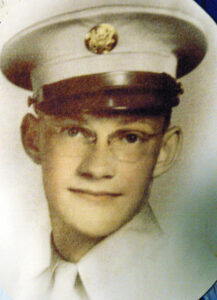
In 1939, Montevideo MN was a heavily Scandinavian part of the United States. There were also many people of German heritage in the area. The German immigrants living there were generally pleased with the “nation building” in their Fatherland. The Scandinavians did not like what was happening so conversations among the townspeople, including students, were friendly but sometimes uncomfortable. The townspeople’s impressions changed December 11, 1941, with the declaration of war against Germany (declaration against Japan December 8, 1941), which was chilling to Germans and Scandinavians alike, as well as Torbert’s family. Young Deryl Torbert had no inkling that in a few years he would take part in great battles to be fought in Europe and on German soil.
After graduating from High School in 1942, his family moved to Minneapolis. In February 1943, Torbert was drafted and called to active service at Fort Snelling, MN where he received his uniforms and was processed for duty.
After a few days, he was sent to Camp Robinson, AR for three months to receive basic training and surprisingly, was designated a medical corpsman. He was taught to care for battle wounds and typical diseases that would be encountered in Europe or the Pacific. His commanding officer liked Torbert and asked if he would like to go to some specialized training. Torbert agreed and went to Louisiana State University for a nine- month assignment for training as a combat engineer. He had very little time outside the classroom and study hall. Torbert did have some free time to attend the LSU Presbyterian Student Center and met his future wife, Nori there.
The special training program was dismantled suddenly in early 1944 because of the desperate need for combat troops in Europe. Orders came through for Torbert and about 3,500 other men from LSU to be transferred to the 99th Infantry Division at Camp Maxey in Texas. At Camp Maxey, Torbert received additional combat training. His conditioning and endurance were superb, and he was prepared for combat.
After a train ride to Camp Miles Standish near Boston, MA, they embarked to England on September 30, 1944, arriving at Southampton on October 10. The incessant inspections and drilling caused the men to be itching for war. After more training and pep talks from the commanding officer, they rode in Landing Crafts to Le Havre, France, arriving on November 3. As Torbert says, “We thought we were hot stuff and ready for anything”.
The sight at Le Havre was sobering because of blown up ships in the harbor and devastation in the city and countryside. Surprisingly, some German sympathizers among the French fired upon the new arrivals. Fortunately, no one was hit. That first cold night, the men were in pup tents and pelted with sleet and rain, making it difficult to sleep.
Early the next morning, the men were sent to Aubel, Belgium by truck to relieve the battle weary 69th division holding a defensive position near the front lines. Torbert took up his assigned position with his Browning Automatic Rifle (BAR). The German battle lines were about a mile away and all the men were told to fire upon anything moving in front of them. One squad leader had been going from foxhole to foxhole encouraging his men and was shot because he got too far in front of the foxholes. His intentions were admirable but fatal to him. That death caused Torbert to be promoted to assistant squad leader. This new job resulted in Torbert regularly leading dangerous patrols to locate German positions and report to Battalion HQ.
For a time, there was not much action going on near his position near Monschau, Belgium. The men were miserable in the cold, with rain, snow, and sloppy conditions. It was the “calm before the storm”. Torbert was wearing “long johns”, two pairs of wool pants, a wool shirt, and a short jacket called an Eisenhower jacket. General Eisenhower designed the jacket himself as a uniform item. He also had his BAR with spare ammunition, hand grenades, K rations, canteen, and a steel helmet. This heavy clothing was not enough, and the men were in danger of freezing. As Torbert said, “My feet were the weakest points on my body”. His boots never seemed to dry out from the rain, mud, and snow. Men had to take their socks off to dry them over a fire, an uncomfortable act in freezing conditions, to avoid trench foot and gangrene. Many men were sent back to the infirmary to allow them to recover from trench foot. Since Torbert had only the beginning of trench foot, he was issued some very rare rubber overshoes, which helped him avoid the rampant foot problems.
On December 13, the 99th was ordered to go on the attack, against heavy resistance, to capture some pillboxes on the Siegfried line and a bridge held by the Germans. On the night of the 14th, heavy resistance bogged down the offensive maneuver. At the bridge, half of Torbert’s patrol was on the far side nearer the Germans and Torbert’s half on the near side. Orders came down to dig and in and prepare for enemy attacks. The morning of December 16, German General Gerd von Rundstedt’s army attacked fiercely as the beginning action of the Battle of the Bulge. The 99th was cut up and surrounded but held off and was able to withdraw. Half of Torbert’s patrol on the other side of the bridge was caught and killed. The sound of tanks and artillery was deafening. The “88” artillery guns of the Germans were firing into the trees so the shells would explode, and shrapnel would rain down on men in the woods. Foxholes were little protection from the death coming from above. As the 99th withdrew, defensive lines strengthened, causing the Germans to retreat from superior firepower.
Communication was terrible and many units were lost and had no idea what the situation was. Torbert says his greatest Christmas present in 1944 was the fog and snow lifting so our bombers and fighters could bomb and strafe the German infantry and tanks. With better visibility, our artillery also began to blast German positions only 100 yards in front of Torbert’s foxhole.
Torbert was hungry, thirsty, and exhausted after weeks in foxholes defending his positions. Finally, food, supplies, and more firepower became available, and the Germans started to withdraw. The Battle of the Bulge was over on January 25, 1945, after raging 41 days! Large units of German troops began surrendering. Except for die-hard SS elite troops, resistance was slackening in that area of Belgium. .
After clearing several small towns of German resistance, the 99th was ordered to the town of Remagen where the Ludendorff Bridge had been captured. It was the only bridge over the Rhine the Germans had failed to blow up. The next morning while crossing the bridge, Torbert was offered a ride in a jeep but refused saying it was too large a target. Ironically, the jeep was hit and destroyed but with no loss of life.
Several men of the 99th were killed by German sniper fire on the streets of Remagen. Due to the death of his Platoon Sergeant, Torbert was promoted to that position. The 99th was then assigned to General Patton’s Third Army and the 99th’s biggest challenge was to keep up with the rapid advance of Patton’s tanks across Germany. Along the way, the 99th liberated slave labor camps and prisoner of war camps. At the same time, German combat units were surrendering in large numbers.
In Salzburg, Austria on the way to Vienna, orders came down to withdraw from any confrontation with the Germans. Two days later, on May 7, 1945, Germany surrendered. The surrendered German troops were young, docile, and despondent except for the SS troops who were still arrogant and difficult to control. Torbert and his platoon were tired, bedraggled, smelly, and unkempt combat survivors, just happy to be alive and ready to go home.
Before long Torbert received orders to go home on leave and then be prepared to head to the Pacific for the invasion of Japan. During the voyage to the US, Japan surrendered, and the war was over. Torbert was discharged in November 1945 and married his sweetheart from Baton Rouge, LA in December 1945.
He went on to graduate from LSU with a degree in Social Work. After working in various locations, his last work was in the Developmental Disability Training Center in Greensboro. He retired in 1986.
Torbert is married to wife Nori and has three daughters, seven grandchildren, and three great grandchildren. He and his wife live active lives today knowing and appreciating that Deryl Torbert was one of those whose life was miraculously spared during the combat missions of the 99th Division, nicknamed “Battle Babies”, during World War II.
Interviewed 2/19/2003